I'm Yeimy Rivera, a solar Astrophysicist studying our local neighborhood star.

I study the physical processes that heat and accelerate the solar corona and solar wind, linking multi-wavelength remote-sensing observations with in-situ measurements from NASA's Parker Solar Probe, ESA's Solar Orbiter, and spacecraft around the Solar System.

The Sun today in EUV (193 Å)·
Movie updates automatically. Video: SDO/AIA · NASA


About me

A little about me

I grew up in sunny Los Angeles and now live in snowy Boston.

I am a solar physicist at the Center for Astrophysics | Harvard & Smithsonian, where my research investigates the fundamental physical processes that drive our Sun. My work has focused on bridging the Sun’s atmosphere and the broader solar system by linking high-resolution, multi-wavelength remote observations of the solar atmosphere with in-situ plasma measurements collected locally across the solar system. As part of the NASA's Parker Solar Probe and ESA’s Solar Orbiter missions, I focus on the scientific synergy between these observatories. My work centers on the strategic coordination of multi-spacecraft observations to capture comprehensive datasets that trace the complex evolution of the solar corona and the solar wind.

Yeimy Rivera

Research

Recent publications
& research

My research combines multi-wavelength remote-sensing observations of the solar atmosphere with multi-spacecraft in-situ plasma measurements to determine how the corona and solar wind are heated/accelerated, and where/how it forms. Looking ahead, I plan to extend this toward current and future missions e.g. PUNCH, Proba-3, MUSE, Solar-C, IMAP, Helioswarm and other international missions.

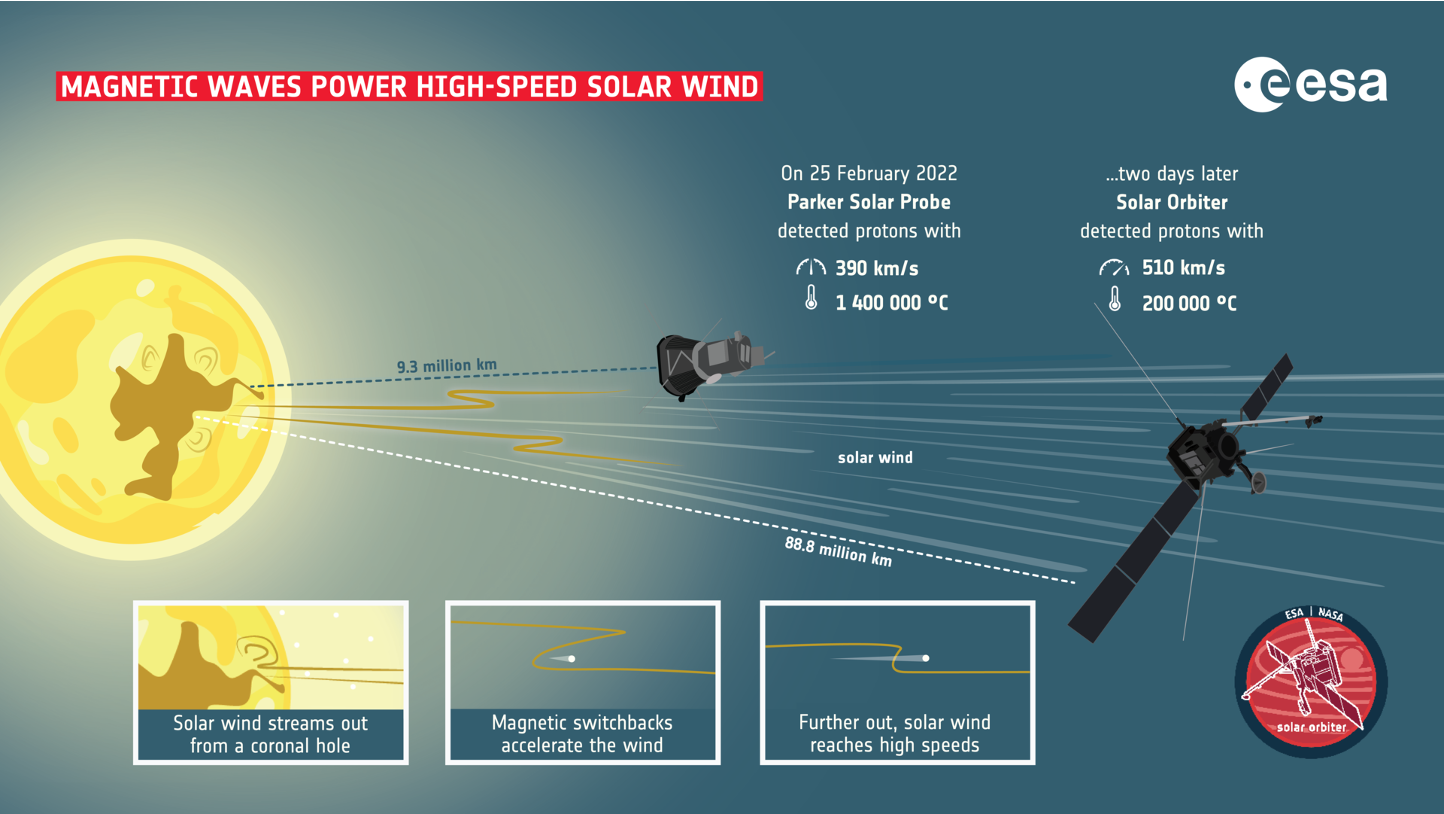
In situ observations of large-amplitude Alfvén waves heating and accelerating the solar wind

Press release

Science · 2024 · This work determines that large-amplitude Alfvén waves, known as magnetic "switchbacks," provide sufficient energy through damping and mechanical work to drive the heating and acceleration of the fast solar wind in the inner heliosphere.

PDF ↗

Differentiating the Acceleration Mechanisms in the Slow and Alfvénic Slow Solar Wind

The Astrophysical Journal · 2025 · This work indicates that Alfvénic slow solar wind has contributions to its acceleration from both wave pressure and thermal pressure gradients, while non-Alfvénic slow wind is driven mainly by thermal pressure gradients.

PDF ↗

Observational Constraints on the Radial Evolution of O6+ Temperature and Differential Flow in the Inner Heliosphere

The Astrophysical Journal Letters · 2025 · Analysis of O6+ ions between 0.3 and 1 au indicates that their relative drift and temperature ratio to protons decrease with distance, following an adiabatic cooling profile that suggests heavy ion heating occurs primarily within 0.3 au of the Sun.

PDF ↗

Mixed Source Region Signatures inside Magnetic Switchback Patches

The Astrophysical Journal · 2024 · Based on heavy ion diagnostics from the Solar Orbiter and Parker Solar Probe, this study found that magnetic switchback patches lack unique elemental or ion composition compared to surrounding solar wind suggesting they are simply embedded within a larger solar wind structure.

PDF ↗

Student Mentorship

Student mentorship

Recent projects and publications from CfA solar REU student mentees. The CfA solar REU is a summer intership that brings together undergraduate students from around the US to participate in an intensive 10-week research program in Cambridge, MA. I've had the pleasure of working with students in the program as a mentor since 2021.

[REU Student · 2022-2026]

Madisen Johnson

Helium Abundance Periods Observed by the Solar Probe Cup on Parker Solar Probe: Encounters 1–14

A systematic assessement of He abundances observed by PSP's SPC revealing 87% of the periods examined are connected to coronal mass ejections (CMEs), with the highest abundance reaching 23.1%. We also show the helium abundances of CMEs increase during the ascending phase of the solar cycle.

Project link ↗

[REU Student · 2023-2026]

Callie A. García

Tracing a Multitemperature Quiescent Prominence’s Thermodynamic Evolution from Sun to Earth

Prominences are cool, dense plasma clouds suspended in the Sun's much hotter corona. When they erupt, does that cool plasma heat up, or can some of it survive? Combining remote sensing diagnostics, captured stereoscopically from three vantage points, with in situ measurements of charge states sampled by near the Earth. Together, diagnostics show the erupting prominence heats up substantially, but its central core can survive as cool, weakly ionized plasma beyond the corona.

Project link ↗

[REU student · 2023-2025]

Andi Kisare

Quantifying the Accuracy of Coronal Models Over the Solar Cycle

Quantitatively tested the PFSS solar coronal model against three accuracy metrics and confirmed it performs worse during solar maximum than solar minimum, as had been suspected but not previously verified. It was found that the existing white-light metric (Badman et al 2022) poorly captured coronal structure at solar maximum and developed an improved method for extracting streamer-belt structure to address this, concluding that non-potential models are preferable for solar-maximum conditions.

Project link ↗

CfA presentation ↗

[High school students · 2024-2025]

Jacqueline Goh, Neel Chattopadhyay, Kristen Chun

Heavy Ion Composition of Magnetic Switchback Patches in Solar Wind

Magnetic switchback patches are bundles of Alfven waves measured in the near-Sun solar wind first identified by Parker Solar Probe (PSP) in 2018. The question remains as to where they are formed: in the corona or on their way to PSP? The work examined heavy ions in switchbacks to determine if any signatures of a coronal origin remained. The work does not find significant heavy ion signatures (in line with Rivera+2024) suggesting an in situ formation process.

Final presentation link ↗


What I do

Scientific Interests

Areas of expertise

Hover over an interest to see more
Heating and acceleration of the solar wind
Heating & acceleration of the solar wind
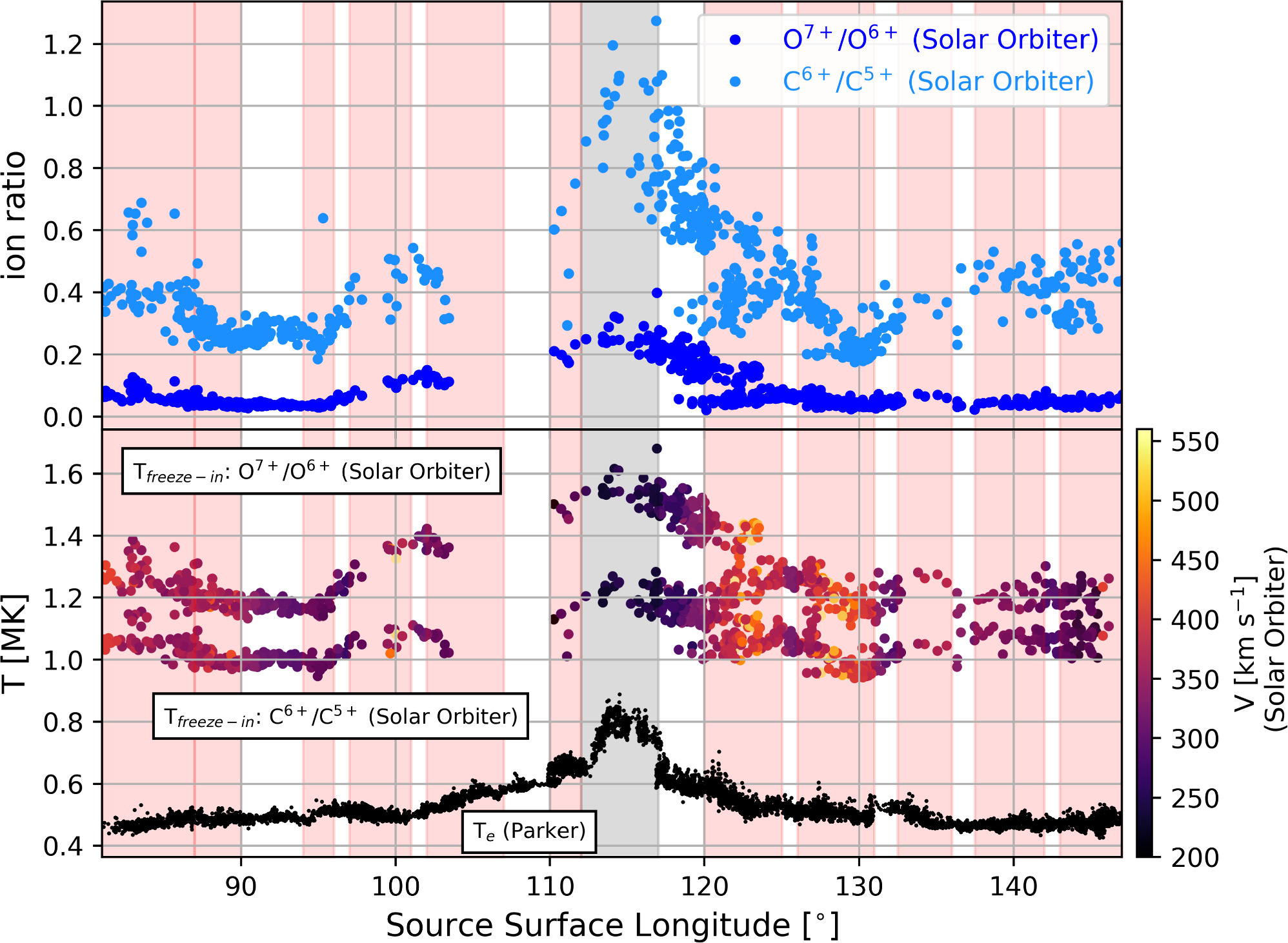
Heavy ion and elemental abundances
Heavy ion & elemental abundances
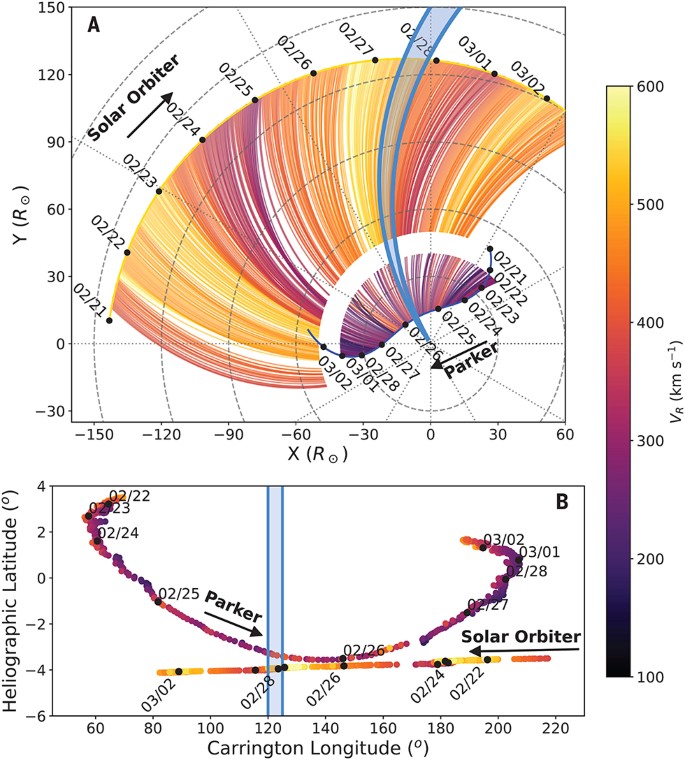
Sun-heliosphere connection
Sun-heliosphere connection & solar wind origins
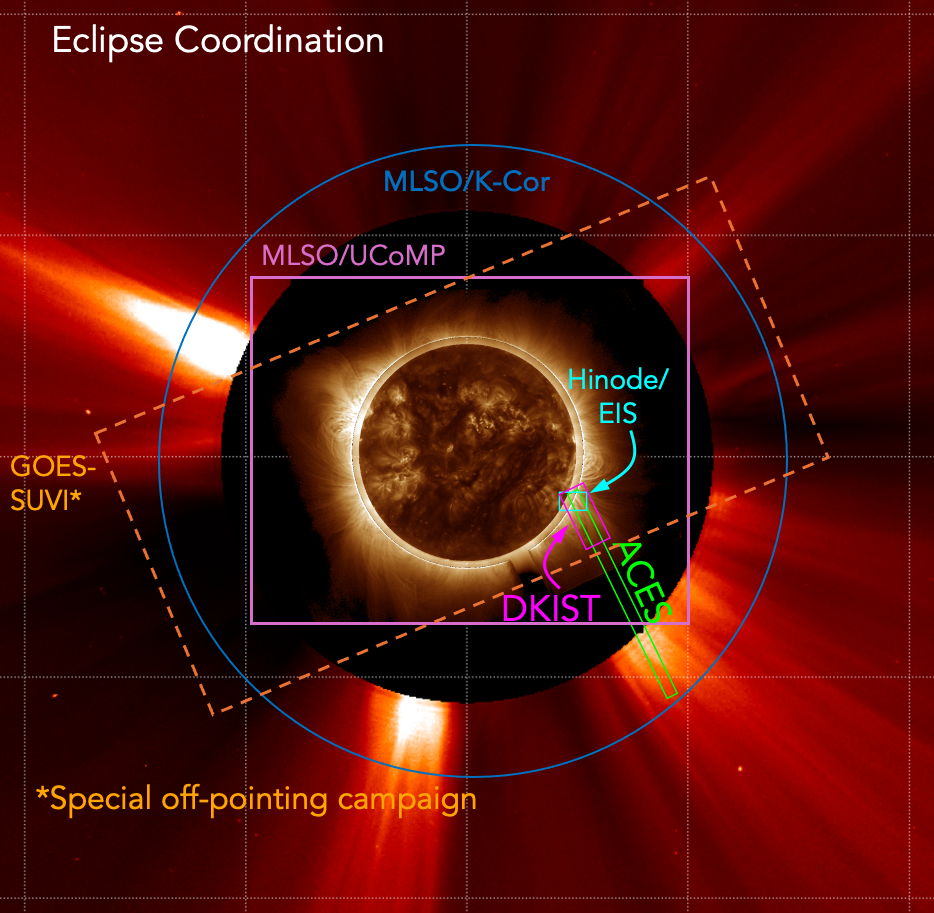
2024 Total Solar Eclipse Coordination

Solar System

Where are the spacecraft now?

Current orbital positions of some heliophysics missions and inner heliosphere planets — the past and next 10 days. Data from NASA JPL Horizons. You can plot spacecraft or planet trajectories in python: plotting trajectories

Current Orbit Positions


Experience &
Education

Education

2016 – 2020

Ph.D. in Space Science

University of Michigan, Ann Arbor, MI

Thesis: Investigating nonequilibrium ionization and recombination processes in solar wind and transient plasma using remote sensing and in situ observations

Experience

2023 – Present

Astrophysicist

Smithsonian Astrophysical Observatory

2020 – 2023

Postdoctoral Researcher

Harvard College Observatory

2016 – 2020

Graduate Student Researcher

University of Michigan

Recent Awards & Honors

2020-2023

Harvard University · Three year postdoctoral fellowship at the Harvard College Observatory.

2022

University of Michigan · Awarded for original and significant contributions to the field as measured in their scholarly publications

2021

University of Michigan · Awarded for outstanding research, leadership and academic performance

2018-2020

High Altitude Observatory · 9 month visiting graduate student fellowship.